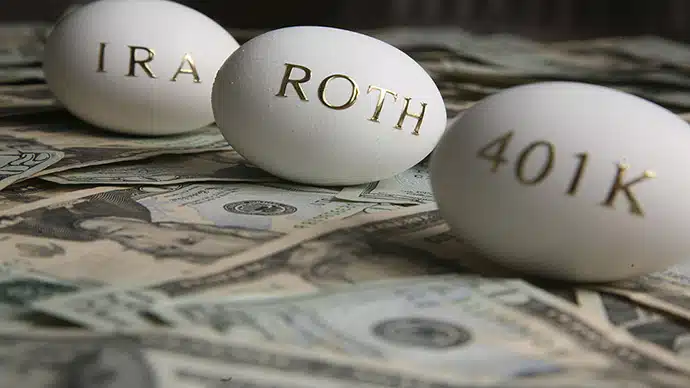
Roth IRA Pros and Cons: What You Need to Know Before Investing

When it comes to retirement planning, Roth IRAs are often seen as one of the best options available. They offer long-term tax-free growth and withdrawals, making them highly appealing for many investors. But like any financial product, it’s important to understand both the Roth IRA pros and cons before deciding if it fits your goals.

The Cons of Roth IRAs

1. You Pay Taxes Upfront

With a Roth IRA, you pay taxes now so that your savings grow tax-free later. If you need an immediate tax deduction, a traditional IRA might be a better choice since it lowers your taxable income in the current year.

2. The Contribution Limit Is Low

Roth IRAs have relatively low annual contribution limits compared to other accounts. You can contribute up to $5,500 per year (or $6,500 if you’re 50 or older). To build a larger retirement fund, investors often combine a Roth IRA with a 401(k) or other savings options.

3. You Have to Set It Up Yourself

Unlike employer-sponsored plans, you must open and maintain your Roth IRA independently. There’s no automatic enrollment. Setting up recurring transfers from your bank account can make it easier to stay consistent with contributions.

4. Income Limits Apply

A Roth IRA comes with income restrictions, meaning high earners may not qualify to contribute directly. However, a backdoor Roth IRA—where you convert a traditional IRA into a Roth—allows individuals above the limit to still enjoy Roth benefits.

The Pros of Roth IRAs

1. Your Savings Grow Tax-Free

Once you pay taxes upfront, your investment grows completely tax-free. Over time, this can make a big difference. For instance, investing $5,500 annually for 30 years could grow to around $555,902 with a Roth IRA compared to $472,835 in a traditional IRA if future tax rates increase.

2. No Required Minimum Distributions (RMDs)

A key Roth IRA advantage is flexibility. Unlike traditional IRAs, there’s no requirement to start withdrawing funds at age 70½. Your money can continue to grow tax-free for as long as you wish, and even be passed on to heirs.

3. You Can Withdraw Contributions Anytime

With a Roth IRA, you can withdraw your contributions (not earnings) at any time without penalty. This makes it a versatile option for those who want access to their funds in case of emergencies.

4. You Gain Tax Diversification

Having both a Roth IRA and a traditional IRA gives you tax flexibility. You can balance withdrawals between accounts to stay within a lower tax bracket, effectively managing your taxable income in retirement.

Traditional IRA vs Roth IRA Pros and Cons

When comparing traditional IRA vs Roth IRA pros and cons, the main difference lies in when you pay taxes. A Roth IRA is ideal if you expect your income and tax rate to be higher in the future, since withdrawals are tax-free. A traditional IRA suits those who prefer tax savings today with deferred taxes later.

Advantages and Disadvantages of a Roth IRA

In summary, the advantages of a Roth IRA include tax-free growth, flexible withdrawals, and no required distributions. However, the disadvantages of a Roth IRA—like income limits and paying taxes upfront—mean it’s not for everyone. Evaluate your income, goals, and long-term tax expectations before opening an account.

FAQs:

A: The main advantages include tax-free growth, no mandatory withdrawals, and flexible access to contributions.

A: The primary disadvantages of a Roth IRA are paying taxes upfront and income limits that can restrict eligibility.

A: If you expect higher taxes in retirement, a Roth IRA is better. For current tax deductions, a traditional IRA may be the smarter choice.

A: Yes, you can use a backdoor Roth IRA strategy to convert traditional IRA funds, even if your income exceeds Roth limits.

A: Yes, qualified Roth IRA withdrawals are 100% tax-free once you reach age 59½ and the account has been open for at least five years.

Featured Posts

Loading featured post

Article summary.

Article: Roth IRA Pros and Cons: Smart Retirement Planning.

Topic: Explore the pros and cons of a Roth IRA.

Section: The Cons of Roth IRAs.

Section: 1.

Section: 2.

Section: 3.

Section: 4.

Easy notes.

  • This page covers roth ira pros and cons: smart.
  • Read one short part at a time.
  • Start with the main point.
  • Take one clear step next.
  • Use the short list first.
  • Use the short headings in order.

Article details.

When it comes to retirement planning, Roth IRAs are often seen as one of the best.

With a Roth IRA , you pay taxes now so that your savings grow tax-free later.

Roth IRAs have relatively low annual contribution limits compared to other accounts. You can contribute up.

Unlike employer-sponsored plans, you must open and maintain your Roth IRA independently. There’s no automatic enrollment.

A Roth IRA comes with income restrictions, meaning high earners may not qualify to contribute directly.

Once you pay taxes upfront, your investment grows completely tax-free. Over time, this can make.

A key Roth IRA advantage is flexibility. Unlike traditional IRAs, there’s no requirement to start withdrawing.

With a Roth IRA, you can withdraw your contributions (not earnings) at any time without penalty.

Having both a Roth IRA and a traditional IRA gives you tax flexibility. You can balance.

When comparing traditional IRA vs Roth IRA pros and cons , the main difference lies.

In summary, the advantages of a Roth IRA include tax-free growth, flexible withdrawals, and no required.

The main advantages include tax-free growth, no mandatory withdrawals, and flexible access to contributions.

This Billshark blog page focuses on explore the pros and cons of a roth ira. learn.

Readers can use Billshark articles to compare service costs, understand billing trends, and discover practical ways.

Each blog page is part of Billshark's larger money-saving library, which includes provider comparisons, cancellation guides.

These articles are designed to help readers make better decisions about subscriptions, telecom services, recurring monthly.

Quick takeaways.

  • Section: The Pros of Roth IRAs.
  • Section: Traditional IRA vs Roth IRA Pros and Cons.
  • Section: Advantages and Disadvantages of a Roth IRA.
  • Section: FAQs.
  • Detail: When it comes to retirement planning.
  • Detail: With a Roth IRA , you pay taxes now so that your savings grow tax-free later.
  • Detail: Roth IRAs have relatively low annual contribution limits compared to other accounts.
  • Detail: Unlike employer-sponsored plans, you must open and maintain your Roth IRA independently.
  • Detail: A Roth IRA comes with income restrictions, meaning high earners may not qualify to contribute directly.
  • Detail: Once you pay taxes upfront, your investment grows completely tax-free.
  • Detail: A key Roth IRA advantage is flexibility.
  • Detail: With a Roth IRA, you can withdraw your contributions (not earnings) at any time without penalty.
  • Detail: Having both a Roth IRA and a traditional IRA gives you tax flexibility.
  • Detail: When comparing traditional IRA vs Roth IRA pros and cons .
  • Detail: In summary.
  • Detail: A: The main advantages include tax-free growth, no mandatory withdrawals, and flexible access to contributions.
  • Detail: A.
  • Detail: A: If you expect higher taxes in retirement, a Roth IRA is better.
  • Context: This Billshark blog page focuses on explore the pros and cons of a roth ira.
  • Context: Readers can use Billshark articles to compare service costs.
  • Context: Each blog page is part of Billshark's larger money-saving library.
  • Context: These articles are designed to help readers make better decisions about subscriptions.

Questions and answers.

What does "Roth IRA Pros and Cons: Smart Retirement Planning" explain?

When it comes to retirement planning, Roth IRAs are often seen as one of the best.

What topics does this Billshark guide cover?

The guide covers The Cons of Roth IRAs, 1. You Pay Taxes Upfront, 2.

The Contribution Limit Is Low, and 3. You Have to Set It Up Yourself.

Why does this topic matter for readers?

With a Roth IRA , you pay taxes now so that your savings grow tax-free later.

How can readers use this Billshark guide?

Roth IRAs have relatively low annual contribution limits compared to other accounts. You can contribute up.

Unlike employer-sponsored plans, you must open and maintain your Roth IRA independently. There’s no automatic enrollment.

A Roth IRA comes with income restrictions, meaning high earners.