Simple guide.

This page covers learn why verizon is losing people.

Use the short sections in order.

Read one short part at a time.

Start with the main point.

Check the next step after that.

Move in small steps.

This page covers verizon losing people has become.

This point is easy to scan.

This note uses easy words.

Read this point in order.

Use one clear idea here.

This line gives one clear fact.

Read one short idea at a time.

The next point is easy to track.

This page covers verizon losing people.

Use this short note for context.

This part stays clear and direct.

Read this short point first.

This note gives one main idea.

Keep the next step clear here.

This part uses short plain words.

Use this quick point for help.

This line is simple to follow.

Read this easy note next.

Easy notes.

  • This page covers verizon losing people.
  • This point is easy to scan.
  • This note uses easy words.
  • Read this point in order.
  • Use one clear idea here.
  • This line gives one clear fact.
  • Read one short idea at a time.
  • The next point is easy to track.
  • Use this short note for context.
  • This part stays clear and direct.
  • Read this short point first.
  • This note gives one main idea.
  • Keep the next step clear here.
  • This part uses short plain words.
  • Use this quick point for help.
  • This line is simple to follow.
  • Read this easy note next.
  • This point keeps the topic clear.

Key points.

  • Use the heading list for main ideas.
  • Use the short bullet list first.
  • Keep the next action clear.
  • Check the next step that fits you.
  • Stop after each short point.
  • Use the short list for main ideas.
  • This point keeps the topic clear.
  • Use this short part as a guide.
  • This note gives a simple step.
  • Read the next point slowly.
  • This part keeps one key idea.
  • Use this quick line for context.
  • This note keeps the meaning clear.
  • Read this short guide first.
  • This note stays short and clear.
  • One simple fact appears here.
  • Use the next short step.
  • Keep each choice easy to review.
  • Check one point before the next.
  • Use clear words and short lines.
  • Read the key fact first.
  • Use this step as a quick guide.
  • Look at the main issue first.
  • Keep the idea small and clear.
  • Review this short fact.
  • Use the next note as help.
  • Take the next point slowly.
  • One short check can help here.

Quick checklist.

  1. This page covers learn why verizon is losing people.
  2. Review the key point list.
  3. Use one idea at a time.
  4. Keep each step clear.
  5. Read the next part slowly.
  6. Review the next short point.
  7. This part stays clear and direct.
  8. Read this short point first.
  9. This note gives one main idea.
  10. Keep the next step clear here.
  11. This part uses short plain words.
  12. Use this quick point for help.
  13. This line is simple to follow.
  14. Read this easy note next.
  15. This point keeps the topic clear.
  16. Use this short part as a guide.
  17. Use the heading list for main ideas.
  18. Use the short bullet list first.
  19. Keep the next action clear.
  20. Check the next step that fits you.
  21. Stop after each short point.
  22. Use the short list for main ideas.
  23. This note gives a simple step.
  24. Read the next point slowly.
  25. This part keeps one key idea.
  26. Use this quick line for context.
  27. This note keeps the meaning clear.
  28. Read this short guide first.

Why Verizon Is Losing Customers at the Fastest Rate

Verizon losing customers has become an alarming trend, with the telecommunications giant reporting a staggering net loss of 289,000 postpaid phone customers during the first quarter of 2025. This exodus matches Verizon's "worst result on record", signaling serious trouble for what was once America's most dominant carrier. Despite having an expansive network across the United States, a network once celebrated for its wireless speed test performance, Verizon is hemorrhaging subscribers at an incredible rate.

This point covers verizon losing people has become.

Verizon losing people has become an alarming.

with the telecommunications giant reporting a staggering.

This point is easy to scan.

This part is easy to check. It gives one clear point. Start with the main idea. This point is easy to scan. Keep the next step clear here.

Why are so many customers abandoning ship? Recent price increases have certainly contributed to the startling decrease in customers, while many longtime subscribers who have been with the company for decades are now saying their goodbyes and looking for greener pastures. Additionally, Verizon customers are discovering unexpected charges on their bills that they never asked for, further driving dissatisfaction. In fact, both T-Mobile and AT&T now offer plans that customers find more attractive, including internet service options that compete directly with Verizon’s offerings. This troubling pattern raises critical questions about Verizon's business strategies and whether the company can reverse its declining fortunes.

This point covers why are so many people abandoning.

many people abandoning ship?

Recent price increases have certainly contributed.

This note uses easy words.

Keep the next step clear. Read the next short point. Move one step at a time. This line gives one clear fact. Read this easy note next.

Verizon loses 289,000 customers amid price hikes
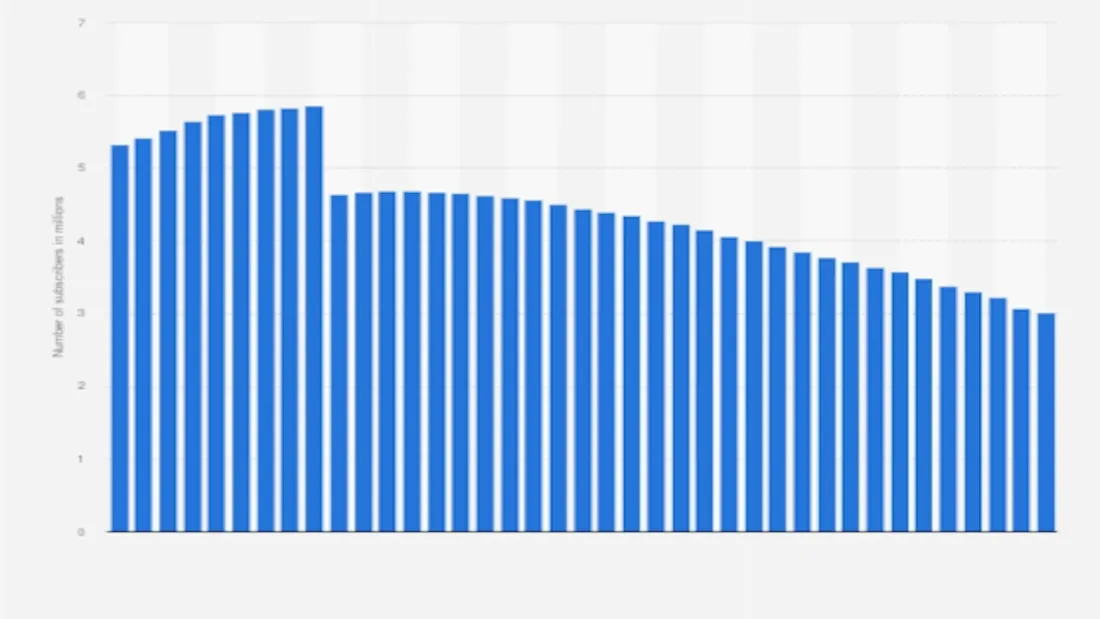
Verizon loses 289,000 customers

Image Source: Statista

Back in early 2017, Verizon lost 289,000 on-contract wireless customers in just six weeks, surprising analysts who had expected the company to add nearly 250,000 subscribers. Fast forward to the first quarter of 2025, and the story has taken an even more troubling turn. Verizon reported losing the same number of postpaid phone customers — 289,000 — in a single quarter, far exceeding Wall Street’s expectations of 166,400 losses and doubling the figure from the same period in 2024. According to New Street Research analysts, this marks Verizon’s worst performance on record.

This point covers back in early 2017, verizon lost.

Back in early 2017.

Verizon lost 289,000 on-contract wireless people.

Read this point in order.

Use the short point first. Move one step at a time. It gives one clear point. The next point is easy to track. Use this short part as a guide.

Verizon CEO Hans Vestberg openly acknowledged that recent price increases were a major factor in this exodus. “We did have a slow start on postpaid phone net adds, largely driven by elevated churn due to recent price ups,” he explained during an April earnings call. Verizon Consumer CEO Sowmyanarayan Sampath echoed the sentiment, admitting the January increases had stronger negative effects than anticipated, noting that “the elasticity on that price up was higher than what we had anticipated.”

This point covers verizon ceo hans vestberg openly acknowledged.

Verizon CEO Hans Vestberg openly acknowledged.

"We did have a slow start.

Use one clear idea here.

This part is easy to check. It gives one clear point. Start with the main idea. This part stays clear and direct. Read the next point slowly.

Despite the backlash, executives remain committed to their strategy, maintaining that the adjustments were necessary to secure long-term stability for their Verizon plans. Sampath stated, “We made a decision to price up certain cohorts in December and January, and they were the right trade-offs to make.” The company believes these increases effectively locked in revenue for the rest of the year.

This point covers despite the backlash, executives remain committed.

Despite the backlash.

executives remain committed to their strategy.

This line gives one clear fact.

Use one step at a time. Start with the main idea. Read the next short point. This note gives one main idea. Use this quick line for context.

Adding to the challenges, Verizon also cited reduced government spending under the new administration as a contributing factor, impacting contracts with FEMA and the Department of Defense. For many subscribers, these developments further fueled dissatisfaction, especially as competitors in the wireless service space continued offering more affordable and flexible alternatives.

This point covers adding to the challenges, verizon also.

Adding to the challenges.

Verizon also cited reduced government spending under.

Read one short idea at a time.

Keep the next step clear. Read the next short point. Move one step at a time. This part uses short plain words. Read this short guide first.

Verizon pushes FCC to delay phone unlocking

Amid its ongoing customer exodus, Verizon has petitioned the Federal Communications Commission (FCC) to waive the 60-day phone unlocking requirement currently imposed on the carrier. The company claims this rule costs them “hundreds of millions of dollars annually” from fraudsters who exploit the policy to traffic devices internationally. “Even a lock of 60 days does not deter device fraud – a huge and growing problem in the United States – and instead enables trafficking in devices that are illicitly sent to foreign marketplaces,” Verizon argued in its FCC filing.

This point covers amid its ongoing people exodus, verizon.

Amid its ongoing people exodus.

Verizon has petitioned the Federal Communications Commission.

The next point is easy to track.

This part is easy to check. It gives one clear point. Start with the main idea. This point keeps the topic clear. Keep each choice easy to review.

Presently, when you purchase a Verizon phone, it remains locked to their network for 60 days before automatically unlocking. Verizon proposes extending this period to match competitors — AT&T locks phones for six months, and T-Mobile enforces its own unlocking policies that often give the carrier an advantage in retaining customers. Verizon argues that its shorter timeframe has become a competitive disadvantage.

This point covers presently, when you buy a verizon.

when you buy a Verizon phone.

it remains locked to their network.

Use this short note for context.

Keep the next step clear. Read the next short point. Move one step at a time. This part keeps one key idea. Use this step as a quick guide.

However, twelve consumer advocacy groups vigorously oppose the petition, arguing that “fraud is not unique to carriers that unlock after 60 days” and that Verizon provided no evidence a longer lock period would prevent theft. These organizations insist the current policy “promotes consumer welfare, strengthens competition, and reduces regulatory confusion.”

This point covers however, twelve people advocacy groups vigorously.

twelve people advocacy groups vigorously oppose.

arguing that "fraud is not unique.

This part stays clear and direct.

Use the short point first. Move one step at a time. It gives one clear point. This note keeps the meaning clear. Keep the idea small and clear.

The timing of this regulatory maneuver is particularly noteworthy as Verizon struggles to retain subscribers. Critics suggest this represents yet another obstacle for customers considering switching carriers, essentially trapping them longer on Verizon’s network regardless of service satisfaction.

This point covers the timing of this rules maneuver.

The timing of this rules maneuver.

Critics suggest this represents yet another obstacle.

Read this short point first.

This part is easy to check. It gives one clear point. Start with the main idea. This note stays short and clear. Use the next note as help.

Regulatory strategy fails to address core issues

Beyond regulatory maneuvers with the FCC, Verizon faces fundamental service issues that continue driving customer departures. The company’s history reveals a troubling pattern of prioritizing regulatory strategies over addressing core customer concerns.

This point covers beyond rules maneuvers with the fcc.

Beyond rules maneuvers with the FCC.

Verizon faces fundamental help issues that continue.

This note gives one main idea.

Start with the main idea. Keep the next step clear. Use the short point first. Keep each choice easy to review. Read the clear step below.

In one infamous case, Verizon throttled Santa Clara County Fire Department’s internet during California’s largest-ever wildfire in 2018, then offered to restore service only if the department upgraded to a more expensive package. Verizon later acknowledged this was a “communication error,” but only after firefighters were hampered during a critical emergency.

This point covers in one infamous case, verizon throttled.

In one infamous case.

Verizon throttled Santa Clara County Fire Department's.

Keep the next step clear here.

Use the short point first. Move one step at a time. It gives one clear point. Read the key fact first. Read the short answer next.

Furthermore, Verizon’s technical support repeatedly deflects blame for service problems. Customer complaints document how Verizon representatives attribute poor reception to “device hardware/software, terrain surrounding home, quality of ISP, and house structure” — never suggesting their network might be at fault.

This point covers furthermore, verizon's technical support repeatedly deflects.

Verizon's technical support repeatedly deflects blame.

people complaints document how Verizon representatives attribute.

This part uses short plain words.

It gives one clear point. Use one step at a time. Keep the next step clear. Keep the idea small and clear. Keep the next move simple.

Regulatory records show Verizon only improves service quality after regulatory intervention. California Public Utilities Commission noted that “NRF [New Regulatory Framework] creates incentives to save money at the expense of service quality,” while Delaware regulators found “extremely poor outside plant maintenance conditions.”

This point covers rules records show verizon only improves.

rules records show Verizon only improves help.

California Public Utilities Commission noted that "NRF.

Use this quick point for help.

Keep the next step clear. Read the next short point. Move one step at a time. Take the next point slowly. Check the main need first.

Most recently, Verizon abruptly terminated its diversity, equity and inclusion programs at the request of FCC Chairman Brendan Carr to secure approval for its $9.6 billion Frontier Communications acquisition. Moves like this have only made it easier for competitors such as AT&T to win over dissatisfied Verizon customers by positioning themselves as more customer-focused and service-driven alternatives.

This point covers most recently, verizon abruptly terminated its.

Verizon abruptly terminated its diversity.

inclusion programs at the request of FCC.

This line is simple to follow.

This part is easy to check. It gives one clear point. Start with the main idea. Keep the plan easy to follow. Use one clear idea here.

Conclusion

Verizon stands at a critical crossroads as it loses customers at record speed. The 289,000 postpaid losses in a single quarter highlight deeper structural problems, with price hikes and service frustrations pushing subscribers toward rivals like T-Mobile and AT&T.”

This point covers verizon stands at a critical crossroads.

Verizon stands at a critical crossroads as.

The 289,000 postpaid losses in a single.

Read this easy note next.

Start with the main idea. Keep the next step clear. Use the short point first. Use one small step at a time. The next point is easy to track.

Regulatory tactics alone won’t stop the churn. While initiatives like offering wireless broadband may help, meaningful improvements in service quality and pricing are essential if Verizon wants to win back customer trust and avoid further erosion of its market share.

This point covers rules tactics alone won't stop.

rules tactics alone won't stop the churn.

While initiatives like offering wireless broadband.

This point keeps the topic clear.

Move one step at a time. This part is easy to check. Use one step at a time. Check the main need first. This note gives one main idea.

FAQs:

Q1: Why is Verizon experiencing a significant loss of customers?

A: Verizon is losing customers at a rapid rate due to recent price increases, unexpected charges on bills, and more attractive plans offered by competitors like T-Mobile and AT&T.

This point covers a: verizon is losing people.

Verizon is losing people at a rapid.

unexpected charges on bills.

Use this short part as a guide.

Use one step at a time. Start with the main idea. Read the next short point. Read this point in order. Use this quick point for help.

Q2: How many customers did Verizon lose in the first quarter of 2025?

A: Verizon reported a net loss of 289,000 postpaid phone customers during the first quarter of 2025, which was described as their 'worst result on record' by analysts.

Use the short point first. Move one step at a time. It gives one clear point. The next point is easy to track. Use this short part as a guide.

Q3: What is Verizon's stance on phone unlocking policies?

A: Verizon has petitioned the FCC to extend the phone unlocking period from 60 days to six months, claiming it would help prevent fraud. However, consumer advocacy groups oppose this change.

This point covers a: verizon has petitioned the fcc.

Verizon has petitioned the FCC to extend.

claiming it would help prevent fraud.

This note gives a simple step.

Move one step at a time. This part is easy to check. Use one step at a time. Use this short note for context. This note gives a simple step.

Q4: How has Verizon responded to its declining customer base?

A: Instead of addressing core service issues, Verizon has focused on regulatory strategies, such as attempting to change unlocking policies and terminating diversity programs to secure regulatory approvals.

Use one step at a time. Start with the main idea. Read the next short point. This note gives one main idea. Use this quick line for context.

Q5: What are some alternatives customers are considering instead of Verizon?

A: Many customers are switching to T-Mobile and AT&T, which continue to add new subscribers each quarter by offering more attractive plans and potentially better customer service.

Start with the main idea. Keep the next step clear. Use the short point first. Keep the next step clear here. This note keeps the meaning clear.

Featured Posts

Loading featured post

Article summary.

Quick context.

This article explains why Verizon has been losing customers and what that signals about wireless competition.

Readers can learn how price increases, plan value, and policy decisions affect carrier switching.

The page focuses on customer loss, FCC issues, phone unlocking, and better plan comparison.

Billshark uses this route to connect wireless market shifts with smarter mobile-bill decisions.

This page covers verizon losing people.

This point is easy to scan.

This note uses easy words.

Read this point in order.

Use one clear idea here.

This line gives one clear fact.

Read one short idea at a time.

The next point is easy to track.

Use this short note for context.

This part stays clear and direct.

Read this short point first.

This note gives one main idea.

Keep the next step clear here.

This part uses short plain words.

Use this quick point for help.

This line is simple to follow.

Read this easy note next.

This point keeps the topic clear.

Use this short part as a guide.

This note gives a simple step.

Easy notes.

  • This page covers verizon losing people.
  • This point is easy to scan.
  • This note uses easy words.
  • Read this point in order.
  • Use one clear idea here.
  • This line gives one clear fact.
  • Read one short idea at a time.
  • The next point is easy to track.
  • Use this short note for context.
  • This part stays clear and direct.
  • Read this short point first.
  • This note gives one main idea.
  • Keep the next step clear here.
  • This part uses short plain words.
  • Use this quick point for help.
  • This line is simple to follow.
  • Read this easy note next.
  • This point keeps the topic clear.

Article details.

The article explains how price hikes and weaker perceived value can push subscribers toward competitors such as T-Mobile and AT&T.

It gives readers context about customer losses, unlocking policy disputes, and why regulatory positioning does not solve service dissatisfaction.

The page connects carrier strategy with real consumer questions about switching, savings, and device flexibility.

Billshark uses this route to help readers understand when loyalty to a major carrier stops making financial sense.

The guide supports people comparing wireless plans, total value, and ways to protect service quality while lowering monthly costs.

Read this easy note next.

This point keeps the topic clear.

Use this short part as a guide.

This note gives a simple step.

Read the next point slowly.

This part keeps one key idea.

Use this quick line for context.

This note keeps the meaning clear.

Read this short guide first.

This note stays short and clear.

One simple fact appears here.

Use the next short step.

Keep each choice easy to review.

Check one point before the next.

Use clear words and short lines.

Read the key fact first.

Use this step as a quick guide.

Look at the main issue first.

Keep the idea small and clear.

Review this short fact.

Use the next note as help.

Take the next point slowly.

One short check can help here.

Quick takeaways.

  • Customers leave when price increases outpace perceived value.
  • Unlocking rules and policy fights matter because they affect switching freedom.
  • Readers can use the page to compare Verizon against other carriers more critically.
  • The article links carrier churn with smarter wireless shopping.
  • Use this step as a quick guide.
  • Look at the main issue first.
  • Keep the idea small and clear.
  • Review this short fact.
  • Use the next note as help.
  • Take the next point slowly.
  • One short check can help here.
  • Read the clear step below.
  • Use this point to stay on track.
  • Keep the plan easy to follow.
  • Read the short answer next.
  • Check the key cost here.
  • Use one small step at a time.
  • Keep the next move simple.
  • Read the short facts in order.
  • Use the key list for help.
  • Check the main need first.
  • This point is easy to scan.
  • This note uses easy words.
  • Read this point in order.
  • Use one clear idea here.
  • This line gives one clear fact.
  • Read one short idea at a time.
  • The next point is easy to track.